Mark OgdenJun 20, 2026, 03:11 AM ET
LOS ANGELES -- The 2026 FIFA World Cup has become a story of the power of the diaspora, with almost a quarter of all players at the tournament being born outside of the country which they are representing in the United States, Mexico and Canada.
Of the 1,248 players across the 48 competing nations, 288 (23.07%) qualify for their country through their ancestry or naturalization. Erling Haaland (Norway), Michael Olise (France), Scott McTominay (Scotland) and Antoine Semenyo (Ghana) were all born in England, while six of the USMNT squad, including Gio Reyna (Germany) and Sergiño Dest (Netherlands), were born outside their national border. Curaçao has 25 of its 26 players born outside the Caribbean island, with only former Manchester United forward Tahith Chong having a Curaçao birthplace.
International football has increasingly tapped into ancestry since the Republic of Ireland were the first nation to significantly exploit what became known as the "Granny Rule" at the 1990 World Cup, when 13 members of their squad were born outside the island of Ireland. Cape Verde defender Pico Lopes, born in Dublin, was famously called into the African nation's squad after responding to a LinkedIn message from the national association, but no player at this World Cup can match Dennis Dargahi's journey to the tournament with Iran.
It is a story of DNA tests, a name change, and a race to secure a passport -- all of it sparked by an Instagram post from one of Iran's most famous actors.
- Welcome to 'Tehrangeles': Watching Iran with L.A.'s Iranian community - O'Hanlon: World Cup overreactions after one round of games - World Cup 2026: Fixtures, results and all coverage
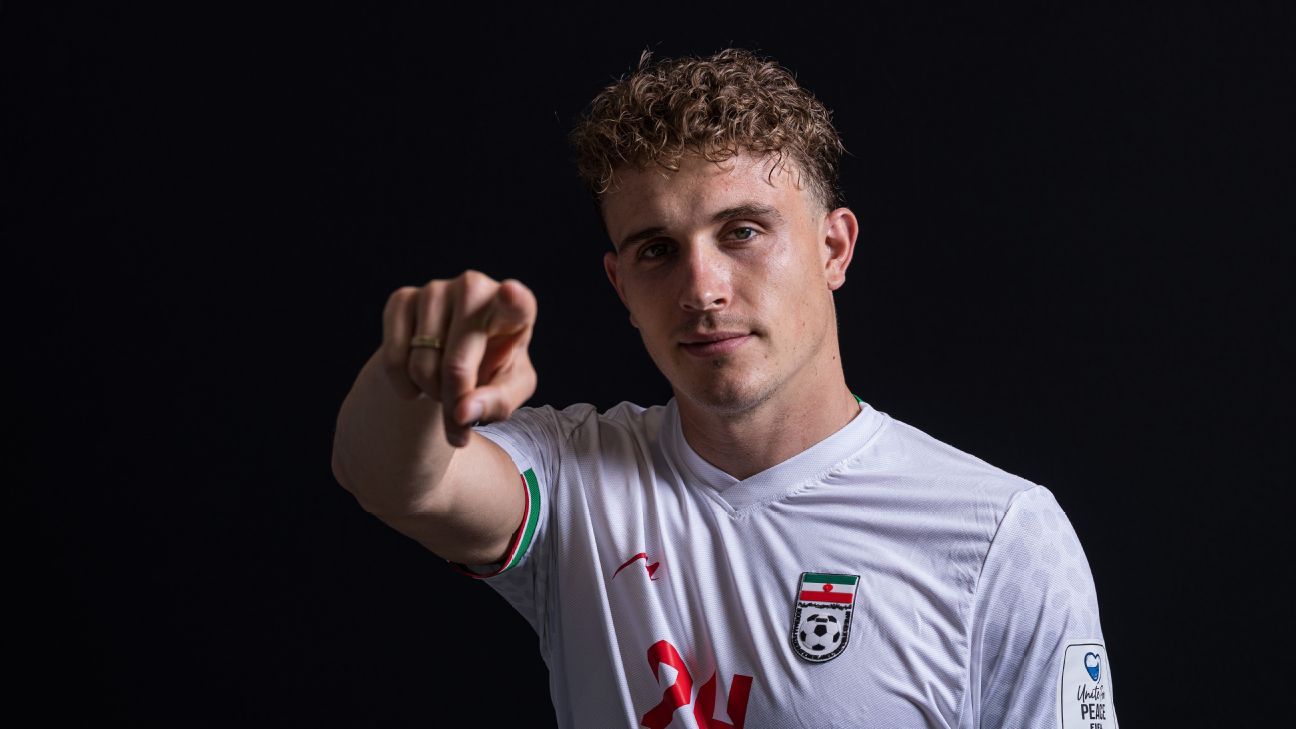
The 29-year-old Standard Liege forward, who previously played for Borussia Monchengladbach, Celta Vigo and Union Saint-Gilloise, has still to make his debut for Iran after a last-minute dash to secure his citizenship was only completed last month. But Germany-born Dennis Eckert could make his first appearance for the Iranians as Dargahi when they face Group G rivals Belgium in Los Angeles on Sunday.
Dargahi has taken the Iranian surname of his aunt, Anahita Dargahi, who is one of Iran's most high-profile TV and film stars, and his place in the country's World Cup squad is all down to Anahita inadvertently revealing his Iranian heritage on social media.
"Anahita posted one time a picture with me and my family, wishing us a Merry Christmas or Happy New Year, something like that," Dargahi told the Gol Bezan podcast. "So some people found out and then I made my professional way and it happened like this.
"People asked me, "Are you Iranian and is your aunt Anahita?" And I said, yes. And yes, she's my aunt. That's how life is.
"I think if she wasn't famous, nobody would ever know that I'm Iranian, but my body is Iranian blood, and I can't hide that."
Dargahi's path to a call-up wasn't a simple case of pledging his allegiance to Iran after previously representing Germany at under-19 level.
Born to a German father and Spanish mother, Dargahi has Iranian ancestry through his paternal grandfather, but strict rules in Iran only allow citizenship to be granted to the direct relatives of passport holders. Dargahi's father, born in Germany while his own father was studying in the country, never applied for Iranian citizenship.
With Dargahi's grandfather no longer alive, his only route to securing Iranian citizenship was to prove his heritage through a DNA test: His father had to travel to Tehran to provide a DNA sample, which would then be tested against Anahita Dargahi's DNA to confirm a link. That process only resolved itself in April, with the Iranian authorities finally granting Eckert a passport in May, enabling him to be called into the Iran squad and leading him to change his surname to Dargahi.
But it was a yearlong process with its ups and downs and while there is no way to confirm the selection process of an Iranian team that continues to be heavily influenced by the ruling powers of the Islamic Republic, the decision to omit star striker Sardar Azmoun from the World Cup squad due to a perceived act of defiance -- he posted an image on social media of him shaking hands with UAE royalty during the conflict with the U.S. and Gulf states -- has unquestionably opened a place in the team for Dargahi.
"I didn't think it would happen," Dargahi, who does not speak Farsi, said. "We tried to figure it out, and then contact with the Iranian FA went away. I'm not sure that it was easy to make it happen. But I would love to play in World Cup. I would really love to play in a World Cup to have this experience and to challenge myself with a national team.
"Anahita helped me so much, with documents and everything. She's a person with such a big heart; she's so nice and such a good person."
Iran's participation at the World Cup had been in doubt ever since the conflict in the Gulf began in February, but the nation is now up and running at the tournament after a 2-2 draw against New Zealand. Dargahi's involvement is as remarkable as that of his new team.
Source: https://www.espn.com/soccer/story/_/id/49117443/iran-world-cup-dennis-dargahi-diaspora-citizenship