Tim VickeryJun 13, 2026, 03:11 AM ET
Back at the 1990 FIFA World Cup in Italy, Republic of Ireland coach Jack Charlton hit upon a revelation. In a World Cup where many third-place teams in their groups advanced to the knockout phase, it was possible to lift the trophy without winning a single game in regulation time.
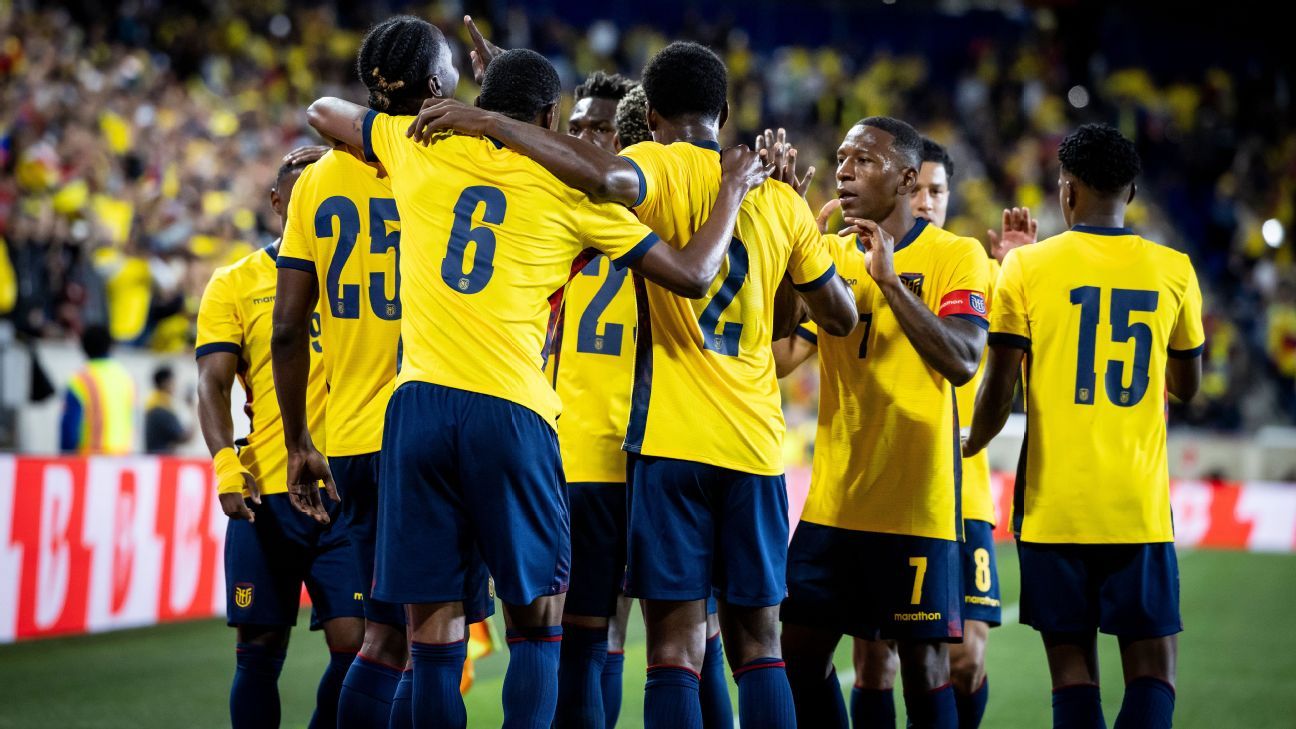
A series of draws and penalty shootout wins would be enough. And what applies to a 24-team tournament also applies to one with 48. This is one of the reasons that many are looking at Ecuador as a potential sleeper this summer.
Ecuador go into Sunday's World Cup opener against the Ivory Coast on a 19-game unbeaten run; only eight of those matches were victories, and three of them came recently in warmup friendlies against relatively weak opposition.
But what really stands out is the quality of their defensive record. And here, six goals conceded in 19 games becomes even better when the friendlies are removed. Some might argue that South America has a disproportionate amount of places (six out of 10 spots and a seventh going to the intercontinental playoff) in the World Cup, but there is no doubt that the CONMEBOL qualification process is highly competitive, with scarcely an easy game to be found. And in the last 11 rounds of qualifying, Ecuador staggeringly conceded just a solitary goal.
The defensive strength was there for all to see in the final of the UEFA Champions League, with Willian Pacho starring for Paris Saint-Germain and Piero Hincapié in the colors of Arsenal. Add young Joel Ordóñez of Club Brugge, and Ecuador can count on three quick, strong and classy center backs who can be shuffled around to fit a back three or a four.
These three players, such as Chelsea midfielder Moisés Caicedo and so many of the Ecuador squad, are all products of a single club: Independiente del Valle -- from the outskirts of the country's capital Quito -- whose youth development work has become renowned all over the world. More than half of the players on the World Cup squad have been with the club at some point.
If Ecuador go into this tournament as opponents to be feared, then Independiente del Valle are a big part of the process. But the club is not only a cause of Ecuador's rise, but it is also a symptom.
They were taken over by investors in 2007, by which time Ecuador had already shown their promise, making a World Cup debut in 2002 and going through to the second round -- still the best performance ever -- four years later. Those behind the Independiente del Valle project could already see the footballing potential of a nation which, just a few years before, had been little more than a Latin American Luxembourg.
Going into the 1989 Copa América, Ecuador's 50-year record in the competition was four wins, 14 draws, 57 defeats, with 69 goals scored and 254 conceded. They developed steadily through the 1990s and the real breakthrough came in 1996, when the current marathon format of World Cup qualification was introduced.
At last, Ecuador had a calendar with regular games and guaranteed income. Better foreign coaches came in, which is always an advantage when any local candidate is automatically caught up in the sniping between the two major cities, Quito and Guayaquil. Up to that point, they had only won five World Cup qualifiers.
Ecuador missed out on the 1998 World Cup in France, but they won six matches in the campaign, and they were on their way. And now, after finishing a commendable second in the 2026 qualifiers, they head for their fifth World Cup, with hopes higher than ever.
Part of that is explained by the fact that they can no longer be seen as pure altitude specialists, only strong at their mountain fortress of Quito. Increasingly an exporter of talent -- only two members of the current squad are based at home -- Ecuador has players who are comfortable under any circumstances. In a gesture of confidence, they made a point of moving the last qualifier at home to Argentina down to sea level at Guayaquil and won the game 1-0.
The Ivory Coast are their next competitive opponents -- bringing back bad memories of a meeting with an African side in Qatar four years ago. After impressive displays in their first two games, Ecuador needed only a draw with Senegal to book their spot in the knockout stage. The uncertainty -- to press forward or sit back -- proved too much, and they lost 2-1. This time, the format of the competition is more forgiving.
As Argentina found out against Saudi Arabia in the last World Cup, a long unbeaten run can be an invitation to disaster. This time, the pressure is not so intense that even a win over Curacao in the second match might be enough to secure a place in the round of 32, before their final group stage match against Germany. And once they get through, no opponent will relish the task of breaking down their defense.
Sebastian Beccacece, their Argentine coach, has the aim of building a side that defends like Arsenal and attacks like Barcelona. So far, his job is half complete. Ecuador remain absurdly dependent on veteran striker Enner Valencia, who scored all of their goals at the 2014 World Cup.
Help was supposed to come from another Independiente del Valle product and rising talent Kendry Páez. The 19-year-old has been compared to Phil Foden, but unlike the Manchester City player, at least Páez is at the World Cup.
Whether he deserves to be is another question and that's being debated in Ecuador. Growing up in public has not been easy, and he has endured two disappointing years, with Chelsea loaning him first to Strasbourg and then to River Plate.
Salvation could arrive in the shape of 21-year-old Jeremy Arévalo, who was born in Spain and represented the country at the youth level. Now with VfB Stuttgart, he has appeared as a possible starter in the past few weeks. A strong, left-footed support striker, it will be interesting to see what role he is handed during the course of the competition.
And if Ecuador can add a little goal power to their defensive excellence, then their status as a sleeper might turn out to be thoroughly justified.
Source: https://www.espn.com/soccer/story/_/id/49043580/why-ecuador-sleeper-team-2026-world-cup