Experts warn unresolved questions over Lebanon could complicate efforts to secure a lasting agreement.
Mediators Qatar and Pakistan have said the United States and Iran agreed on “a roadmap towards reaching a final deal within 60 days”, following what they described as “encouraging progress” during the first day of high-level talks in Switzerland.
The discussions followed the signing of a 14-point memorandum of understanding (MoU) on June 17 that established a framework for de-escalation between Washington and Tehran and laid the groundwork for further negotiations.
list 1 of 4What are the end goals of Iran-US negotiations?
list 2 of 4Iranians gather in Tehran to support team in critical draw against Belgium
list 3 of 4Shipping stalls in Strait of Hormuz after Iran declares key waterway shut
list 4 of 4‘Encouraging progress’ made as first round US-Iran talks end
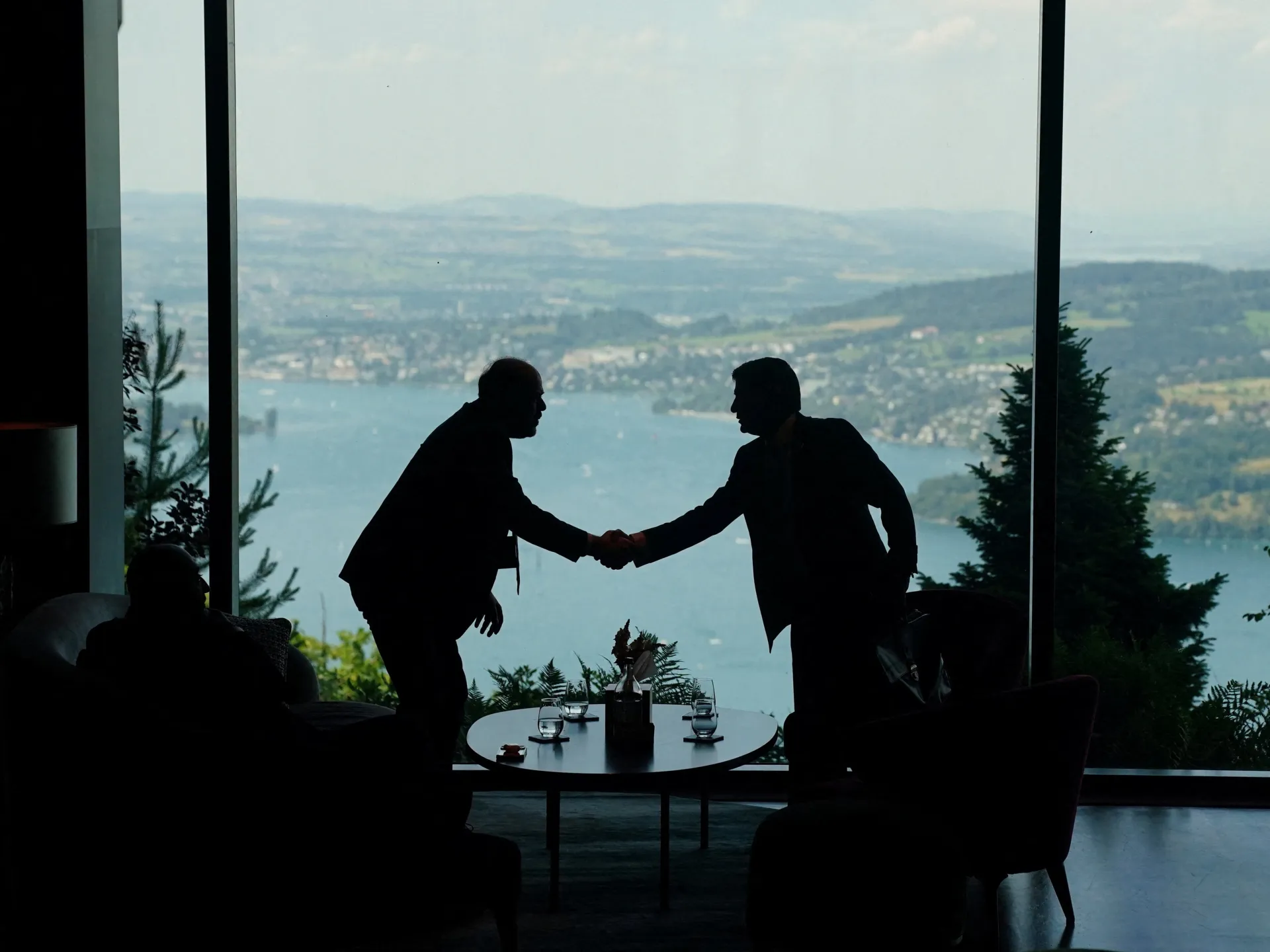
The breakthrough came after a marathon 12-hour meeting at Lake Lucerne attended by senior officials from both countries.
The joint statement also announced the creation of a “de-confliction cell” aimed at ending Israel’s military operations in Lebanon, alongside a high-level committee and direct communication channels designed to support further negotiations.
US Vice President JD Vance led Washington’s delegation, alongside President Donald Trump’s son-in-law Jared Kushner and special envoy Steve Witkoff. Iran’s delegation was led by Parliament Speaker Mohammad Bagher Ghalibaf and included Foreign Minister Abbas Araghchi.
So what are the key takeaways from the talks?
A high-level committee has been established to “provide political oversight on the mediation”, according to a joint statement issued by Qatar and Pakistan, which acted as mediators in the negotiations. The statement said the committee had “agreed upon a roadmap towards reaching a final deal within 60 days”, with further technical talks expected to continue over the next two months.
“Chief negotiators will report regularly to the High Level Committee and lead working groups focused on nuclear, sanctions, and a monitoring and dispute resolution group to ensure the effective implementation of the MoU, and on other matters,” it added.
Thomas Warrick, a non-resident senior fellow at the Atlantic Council, told Al Jazeera the next phase of technical negotiations could prove far more challenging than the political agreement itself, and may ultimately take longer than the 60-day timeline outlined in the interim deal.
The agreement comes as major questions remain unresolved, including whether Iran will be permitted to continue enriching uranium, the fate of its stockpile of highly enriched uranium, the scope of international inspections and the timeline for sanctions relief.
On the nuclear issue, Warrick said “the biggest problem is that removing or downgrading the enriched uranium is going to take several thousand people, probably 1,000 Americans, going into some of Iran’s most sensitive nuclear sites”, referring to Washington’s demand for a role in diluting Iran’s enriched uranium stockpile.
“I can’t imagine Iran being very happy with that idea,” he added.
The parties have also established “a communication line” focused on the Strait of Hormuz to “avoid incidents and miscommunication with the aim of safe passage for commercial vessels through the Strait of Hormuz”.
The announcement comes amid continued disruption to maritime traffic through the strategic waterway, through which a fifth of global oil and gas passes. An analysis by maritime intelligence company Windward showed that 12 vessels crossed the strait on Sunday, down from 35 transits the previous day.
Iran’s de facto blockade of the strait triggered a global energy crisis, which affected economies around the world.
The agreement also includes the creation of a “de-confliction cell” intended to support efforts to “ensure the adherence of the termination of military operations in Lebanon”.
Araghchi also declared “major progress” towards ending the war in Lebanon, but he cautioned that the first real test of the agreement would be the effectiveness of the “Lebanon de-confliction cell”.
It comes as Israeli Prime Minister Benjamin Netanyahu has said Israel will remain in a security zone in southern Lebanon for as long as it deems necessary. The Israeli-established buffer zone covers roughly 602 square kilometres (230 square miles), or about 6 percent of Lebanon’s territory.
The head of the Islamic Revolutionary Guard Corps’s Quds Force then warned Israel to leave southern Lebanon or risk a repeat of its withdrawal from the country in 2000.
Esmail Qaani wrote on social media that if Israel continued its “aggression and occupation”, it would be forced out in “humiliation and defeat”, according to state-run Press TV. Meanwhile, Hezbollah has yet to publicly comment on the agreement.
Al Jazeera’s Nour Odeh, reporting from Ramallah in the occupied West Bank, said that Israeli commentators described the outcome of the Switzerland talks as a strategic dilemma for Israel.
“The past ceasefire with Hezbollah was managed between the US and Israel. It gave Israel freedom of action,” she said.
“But this time, there’s a different dynamic… and Israel feels that it will be compelled to play along. Right now, the thinking, the planning, the manoeuvring in Israel centres around how much compromise can Israel do without completely losing the confidence of the Israeli public.”
Some analysts have questioned how the mechanism will have any impact on the ground in Lebanon. Joey Hood, a former senior US diplomat, noted that neither the Lebanese nor Israeli governments were directly involved in the negotiations that produced the mechanism, despite now being expected to implement any ceasefire arrangements.
“So it’s giving Iran that veto power over Lebanon … So the MoU seems to be saying, we accept Iran’s regional leadership role, including over its proxies,” he said.
Mark Kimmitt, a former US State Department official and retired military general, added that the inclusion of Lebanon in the broader negotiations “complicates it tremendously”.
“The fact remains, it’s not often the case that external powers can solve an internal problem in an internal conflict between two different countries,” he added.
But early signs suggest the agreement has had some impact, with Al Jazeera’s Heidi Pett reporting that “there has been a cautious calm here in Nabatieh as a ceasefire appears to be taking hold” in southern Lebanon.
“It has followed a very brutal and bloody couple of days for this city and the surrounding towns and villages,” she added.
Araghchi has also suggested that the agreement includes significant economic concessions from Washington, although the United States has yet to publicly confirm them.
In a post on X, he said sanctions on Iranian oil exports and petrochemical sales had been waived, the blockade had been lifted, some frozen Iranian assets had been released and a major reconstruction and development plan for Iran had been launched.
He described these measures as key Iranian conditions that had now been met.
However, Warrick cautioned that delivering sanctions relief may prove politically difficult in Washington, particularly where congressional approval is required.
“Congress is very unhappy with this deal right now. And it is not at all clear that Congress would agree to lift some of those sanctions that Iran wants lifted,” he said.
Source: https://www.aljazeera.com/news/2026/6/22/what-are-the-key-outcomes-of-the-iran-us-talks-in-switzerland-what-next?traffic_source=rss