An indictment, a Supreme Court ruling and a carrier in the Caribbean: Washington is converting old confiscation claims into a legal machine for reclaiming the island.
In 1960, Cuba took its docks, sugar and power back from American owners. This May, Washington moved to take them back: it indicted Raul Castro over the 1996 Brothers to the Rescue shootdown, sailed an aircraft carrier into the Caribbean, and won Supreme Court backing for claims over confiscated property. None of this is improvised. The rollout looks chaotic, like much of the spectacle of the current US regime, but its impact is anything but.
Behind this convergence sits old machinery. The US embargo, begun under Eisenhower and tightened under Kennedy, is older than most Cubans alive today. The Helms-Burton Act, a US law since 1996, lets US nationals sue any company that uses property Cuba confiscated from Americans, whether it docks at, ships through or builds on it. Those Americans were mostly US corporations and the Creole families who became Americans in exile. The Foreign Claims Settlement Commission has held its 5,913 certified claims, worth $1.9bn in principal and some $9bn with interest, since the 1960s. Waiting. What is new is not the design but its speed: the taking, and the retaking.
The pace of the retaking recently sped up: on January 3, 2026, US forces seized Venezuela’s president in a predawn raid on Caracas and, in the same operation, killed 32 Cuban officers. The raid cut one of Cuba’s lifelines: Venezuelan oil. Mexico moved to cover the gap, but within weeks, it halted shipments as Washington threatened tariffs on any country that supplied Cuba. By May, parts of Havana were dark for up to 20 hours a day. Now, Trump says Cuba is next for US-imposed regime change, once Iran is settled.
“We are dying alive,” a Cuban television director said last week. Still, the blockade is not evenly borne. The research I began in Cuba in 1998, which became ¡Venceremos?, showed who absorbs the worst of the shock when the economy collapses and the grid goes down: not the families with Miami remittances, nor the elite among them biding their time for a return of their property. Engineered hunger produces its own politics, and the blockade manufactures a demand for “rescue”. When the Havana demographer Juan Carlos Albizu-Campos Espineira calls for “international humanitarian intervention” and even “interposition forces” to “protect the population from violence”, he is speaking from inside that emergency, not inviting a US invasion. But relief without coercion is a road Washington and Miami have consistently refused to take.
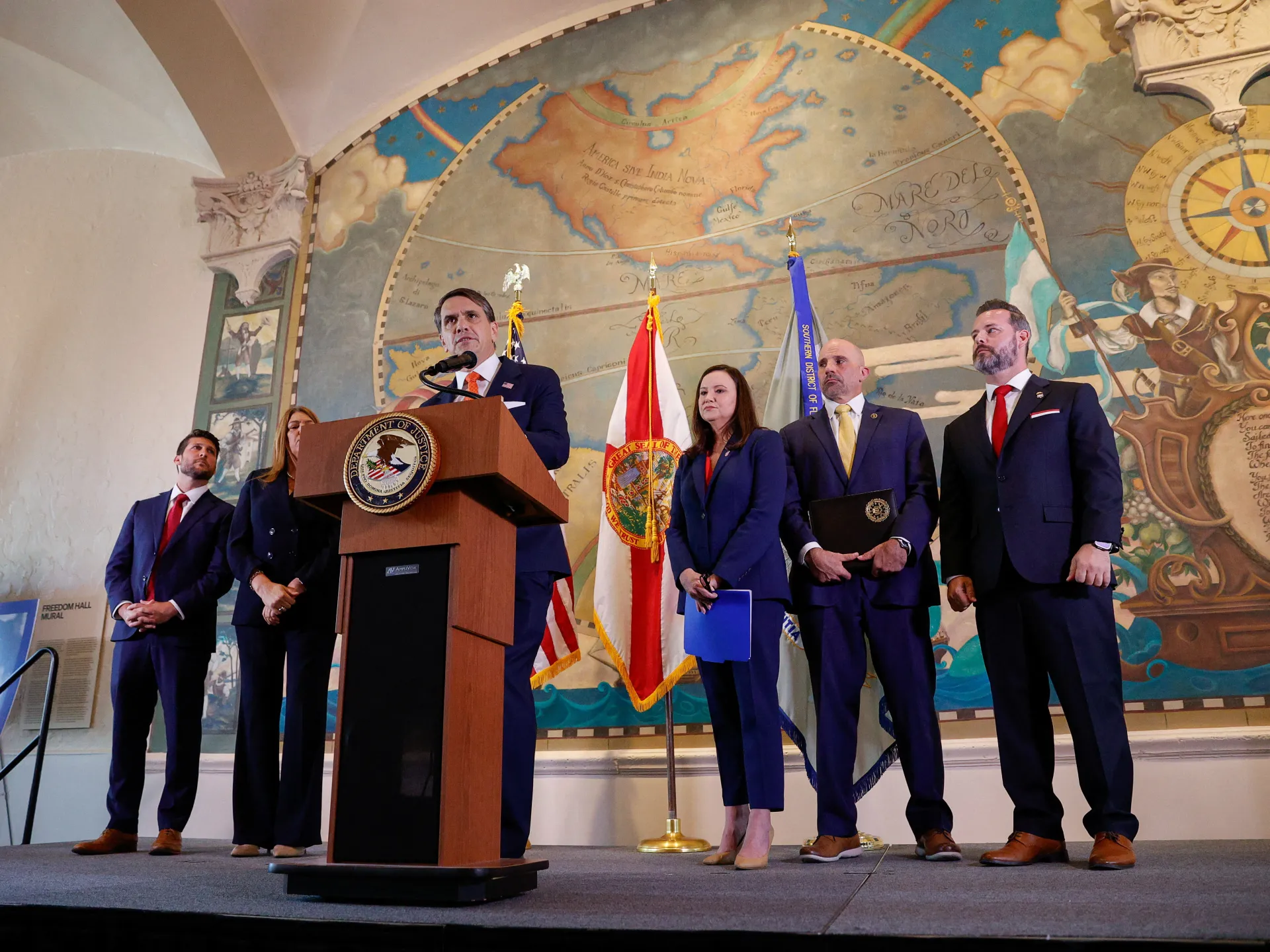
Instead, on May 20, Cuban Independence Day, the Justice Department indicted Raul Castro, 94, for the 1996 downing of two exile planes. The indictment names a former head of state 30 years after the fact, and Washington chose Miami’s Freedom Tower to announce it: the symbolic door of Cuban exile since the 1960s. Asked about extradition, acting Attorney General Todd Blanche said Castro would come of his own will, or by another means. The template is familiar: Lumumba, Bishop, Aristide … The other way is the one just used in Caracas, for Maduro.
The shootdown that led to this indictment was in 1996, but the older grievance is jurisdiction itself. For 60 years, Cuba refused the one thing the indictment asserts: that an American court can reach into Cuba. It sheltered Black liberation activists wanted by Washington, including Nehanda Abiodun and Assata Shakur, and met every demand for their return, and every bounty, with silence. What Washington wants back was never only property; it is submission from a state that spent two generations denying that US law held sway on the island.
The day after the indictment, the US Supreme Court made the retaking law. In Havana Docks Corp v Royal Caribbean Cruises, eight justices held that the cruise lines using Havana’s port from 2016 to 2019 had trafficked in confiscated property, and sent the case back for further proceedings over what they owe. Justice Thomas wrote the majority. Justice Kagan dissented alone. Justice Sotomayor, joined by Justice Kavanaugh, concurred. She warned, however, that this could license recovery of a potentially unlimited amount of money from a potentially unlimited number of people.
That pursuit of recovery is racially structured at its base. Who held property in Cuba in 1959 that the Revolution could nationalise? US corporations and the Cuban Creole class. By 1960, US companies owned or controlled 90 percent of Cuba’s electricity generation, its telephone system, and most of its mining and sugar. The Foreign Claims Settlement Commission’s certified claims reflected the racial-class structure of pre-revolutionary capital. Beyond them sits the larger universe of deeds and titles held by the structurally white Creole exile community. The Florida Cuban-American congressional delegation, including Rubio, Diaz-Balart, Salazar and Gimenez, has made it their project, the legislative arm of a constituency that has waited 66 years for the legal machinery to be built. Black Cubans, whose unfree and semi-free labour built the docks, sugar mills and ports now being litigated, hold no certified claim against the property they made.
In my book ¡Venceremos?: The Erotics of Black Self-making in Cuba, I traced this racial geography through Cuba’s tourism economy: from the pre-1959 pleasure colony to the post-Soviet Special Period, when tourism returned and its burdens again fell unevenly. The cruise economy of 2016 to 2019 was the third turn of the wheel. This ruling licenses a fourth, hoy como ayer, today as yesterday, now secured by federal law.
US readers will recognise this court’s work: restoring a pre-civil rights racial-economic order in the neutral language of property law. Shelby County v Holder (2013) gutted Section 5 of the Voting Rights Act of 1965, and the juridical project of snatching back the Second Reconstruction’s civil rights gains has been steady since. Justice Thomas wrote a concurrence in Shelby County and the majority in Havana Docks. It is the same hand undoing 20th-century redistributive interventions by treating their effects as property violations or constitutional anomalies. Havana Docks is the international application.
The demographer asked for international humanitarian intervention. But there is nothing “humanitarian” about what is arriving. The USS Nimitz and its strike group entered the Caribbean the day after the docks ruling came down, and days later, the head of US Southern Command met Cuban generals at the edge of Guantanamo. The Caracas play is being run, but Venezuela is Venezuela, and Cuba is Cuba. Cuba’s National Civil Defense General Staff is handing families instructions for bombardment. Cuba’s President Miguel Diaz-Canel warns of a bloodbath with incalculable consequences, and means Cuban blood as much as anyone’s. This island does not intend to be taken quietly.
The views expressed in this article are the author’s own and do not necessarily reflect Al Jazeera’s editorial stance.
Source: https://www.aljazeera.com/opinions/2026/6/8/the-retaking-of-cuba?traffic_source=rss