Joey LynchCloseJoey Lynch is a Melbourne-based sports journalist and AYA cancer advocate. Primarily working on football, he has covered the Socceroos, Matildas and A-Leagues for ESPN for over a decade.
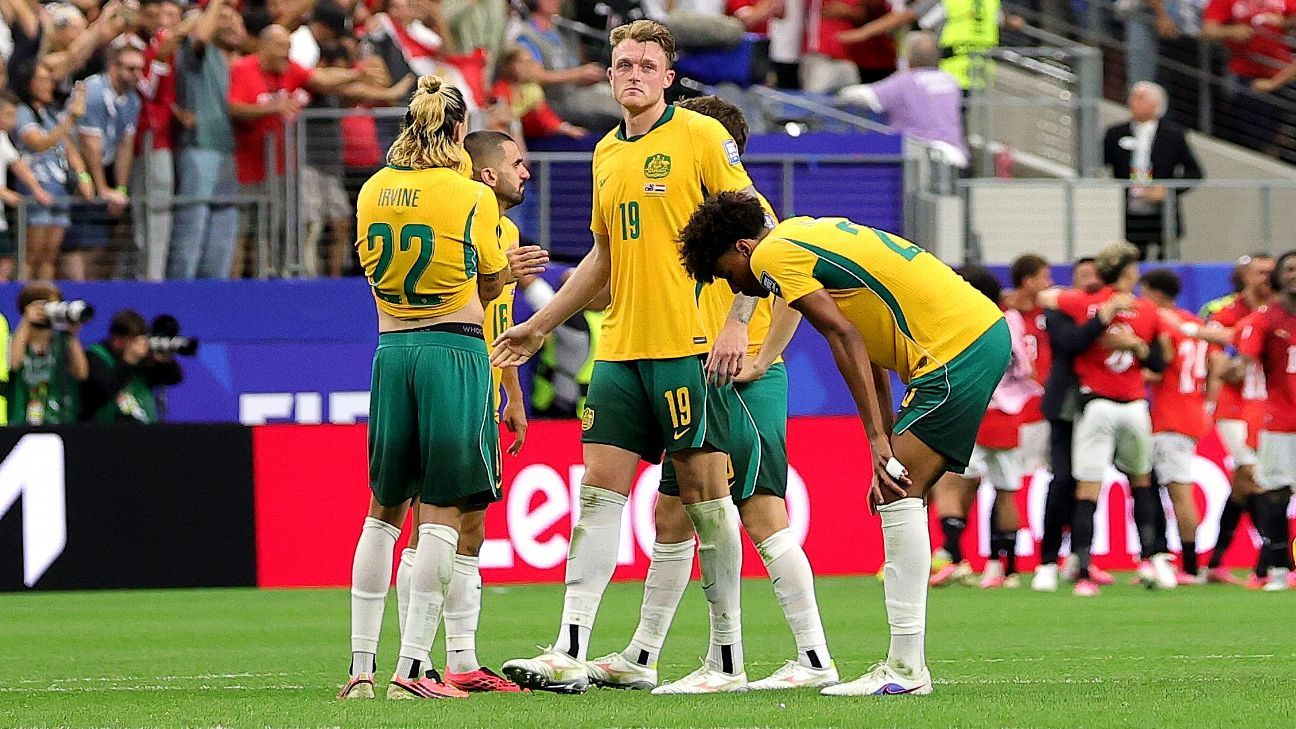
ARLINGTON, Texas -- Deep in the heart of Texas, the Socceroos had theirs broken. After 120 minutes of football could not separate the two team, Hossam Abdelmaguid stepped and fired home a decisive penalty in the shootout that sent Egypt through to the FIFA World Cup round of 16, and sent Australia packing.
In the late morning sun, Cairo erupted in celebration, a historic moment for a football-mad nation. In the freezing early morning of Melbourne and Sydney, live sites fell into a lull, stunned into silence by the sudden realization that it was now all over.
The Pharaohs advanced from a knockout tie for the first time, as African powers who are finally getting their moment on the world stage that they have waited so long for. Mohamed Salah, with time running out for him to secure that signature moment in the international arena, has found one -- deftly dinking his shootout attempt straight down the middle after inducing Australia goalkeeper Mathew Ryan to commit to his dive with an exaggerated runup.
- World Cup bracket: Every team's route to the final - Grades for every team eliminated from the World Cup - Salah leads Egypt to World Cup history with shootout triumph
Four converted penalties were enough, taking the contest 4-2 after Harry Souttar and Lucas Herrington missed their attempts. Egypt goalkeeper Mostafa Shobeir didn't end up making a save for either, with Souttar sending his opening attempt over the bar and Herrington hitting his off the crossbar.
Just why it was Ryan in goal will be one of the questions that long hovers over this result. Patrick Beach had produced a stunning save in the dying embers of the 90 minutes to take the game into extra time, and, per ESPN Global Soccer Research, has prevented 2.65 goals at this World Cup, more than any other keeper. So just why was he taken out for Ryan, who brings leadership and experience but has never really been known as a penalty specialist, and had been rather famously withdrawn for Andrew Redmayne the last time the Socceroos went to penalties? Neither keeper was aware of the plan, they revealed postmatch, which only deepens the mystery surrounding the move.
But that's an acute thing, the pain of the elimination presenting the goalkeeping switch as an easy target. Also an easy target is the choice -- there was a list of penalty assignments ready for players as soon as extra time ended -- to send out two defenders, with a third in Alessandro Circati next up, to take penalties over the likes of Mohamed Touré and Ajdin Hrustic. There's already a natural anger permeating the Australian fan base, demanding, as is their right, as people that also pour their heart and soul into the team, answers to these questions and agonizing over one that got away.
But there's more to it than just the "lottery" of penalties in play for Australia. And how they're addressed will play a serious part in the trajectory of this team. With their equalizer on Friday coming via an own goal from Mohamed Hany, it's now been more than five hours since an Australian player found the back of the net at this World Cup -- Connor Metcalfe in their opening 2-0 win over Türkiye.
Australia's effort throughout this World Cup cannot be questioned, nor can their ability to defend and willingness to hurl themselves in front of every loose ball and shot, but as Australian teams of every ilk have been haunted over the years, that ability to consistently find avenues to goal and produce a moment of magic remains absent.
On this night, when it felt like the game was there for the taking in Dallas, it wasn't. Why was that? Egypt had their moments, too, no doubt, and Omar Marmoush butchered a golden chance to make it 2-0 just after the restart, but there were periods in this game where few would have argued the Socceroos wouldn't have been good value for a goal.
Was it the bounce of the ball? Maybe. Was there an unwillingness to open up and move away from a preferred approach of maintaining compactness and maintaining shape out of possession? Perhaps. Did a young squad, one that had lost Jordan Bos to what is feared to be a devastating injury just moments before halftime, not have the legs and physicality to go 120 minutes in the biggest game of their careers, leading to trade-offs in both personnel deployment and approach? Could be. Did Egypt simply do enough with their own scrambling defense and desperation to see their opponents off? At times, definitely.
In the end, it's not going to be just one thing behind it. But coach Tony Popovic and his staff have consistently spoken throughout this tournament about the extra insights and data they have access to that help them make decisions, information that they have said must remain in house. And that's fair enough; within every team there's inevitably going to be things that, to secure competitive advantage, must be kept in house. But in the absence of this wisdom, those of us outside the four walls can only pick the eyes out of the outcomes that result from their decisions.
Australia's hunt for a first-ever knockout win at the World Cup will last for at least another four years, their third opportunity to claim it now consigned to the dustbin of history. On the previous occasions they've fallen at this hurdle, they've been eliminated by the eventual champions: Italy in 2006 and Argentina in 2022. Perhaps that will give Egyptian fans of a more superstitious bent something to hang their hats on. But in reality, it's unlikely that the Pharaohs will go on to match this feat, meaning this result won't carry the same kind of balm as those.
This was a game that could have been won by Australia, against an opponent that is highly talented, but not of the same tier as the ones that have sent them home previously. Salah ended up having a telling role but spent most of the game hobbling around on his injured hamstring, the Pharaohs seemingly happy to be playing a man down if they could have their inspirational leader on the park. Taken off for each other once again, Australia has not deployed Nestory Irankunda and Touré on the park at the same time since that win over Türkiye.
These are questions for tomorrow, being enveloped by the heartbreak of today.
Source: https://www.espn.com/soccer/story/_/id/49260415/penalty-heartbreak-australia-vs-egypt-world-cup-knockout-win-eludes-socceroos