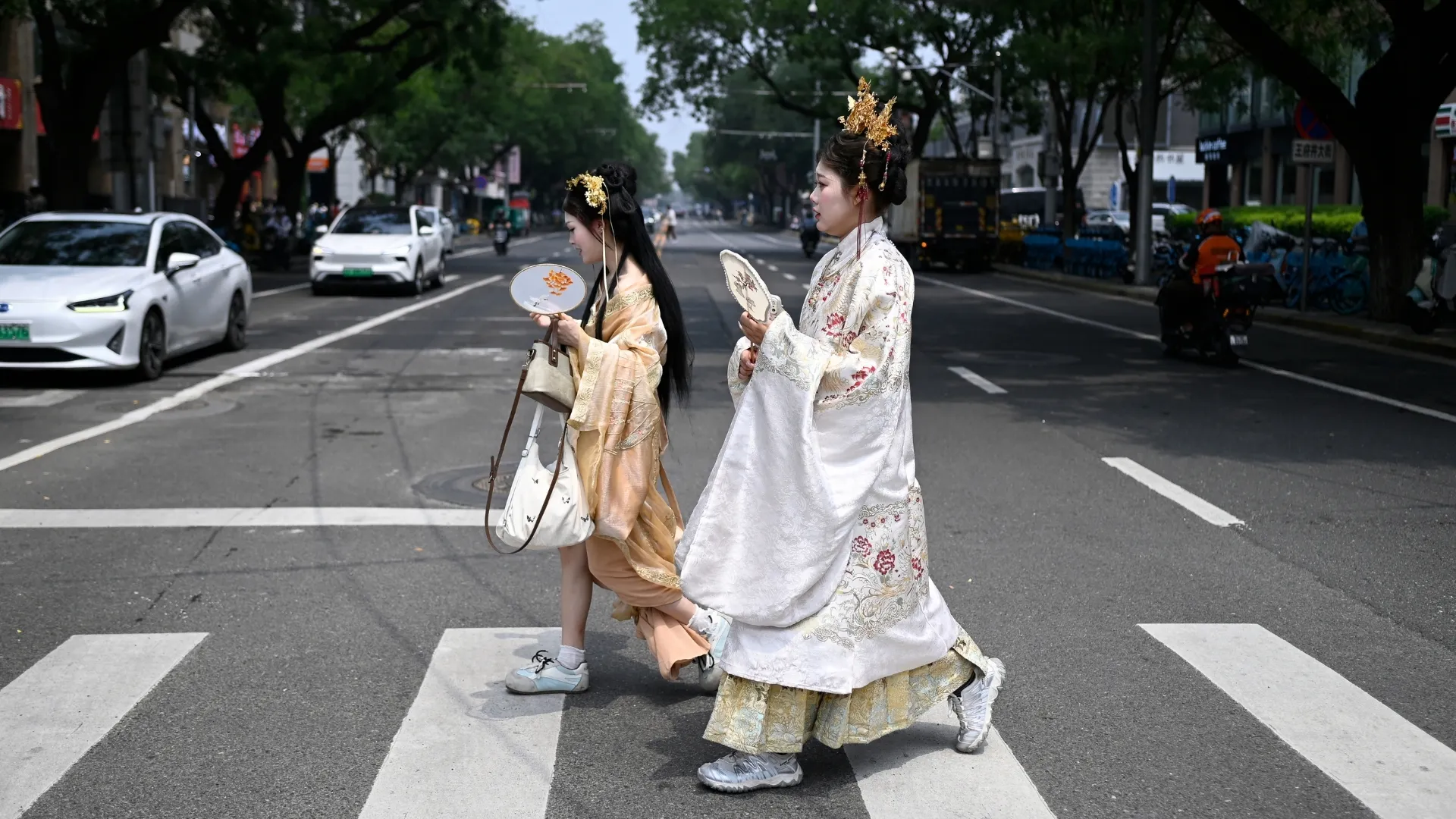
The government says the law will help forge a shared national identity.
Beijing’s new ethnic unity law has taken effect. It strengthens Mandarin’s position as the primary language of education, official business and public spaces across China.
The government says the law’s provisions on social cohesion and preventing separatism benefit everyone.
list 1 of 4Why has Trump refused to renew the USMCA, and what will that mean?
list 2 of 4How US-Iran war may push Gulf countries to ‘diversify’ security alliances
list 3 of 4Man holding Tibetan flag dies after setting himself on fire outside UN
list 4 of 4Iran’s Khamenei funeral: Which world leaders are attending?
But activists abroad say it will further erode the rights of groups such as Uighurs and Tibetans. They are also warning against a clause that states China can take action against those who violate the law outside of the country.
Taiwan has echoed this criticism. Its government warns the law could be used to target people there who are critical of Beijing.
Einar Tangen – Senior fellow, Centre for International Governance Innovation
Zumretay Arkin – Vice president, World Uyghur Congress
William Yang – Senior analyst for Northeast Asia, International Crisis Group
Source: https://www.aljazeera.com/video/inside-story/2026/7/3/is-chinas-new-ethnic-unity-law-a-step-towards-forced-assimilation-2?traffic_source=rss