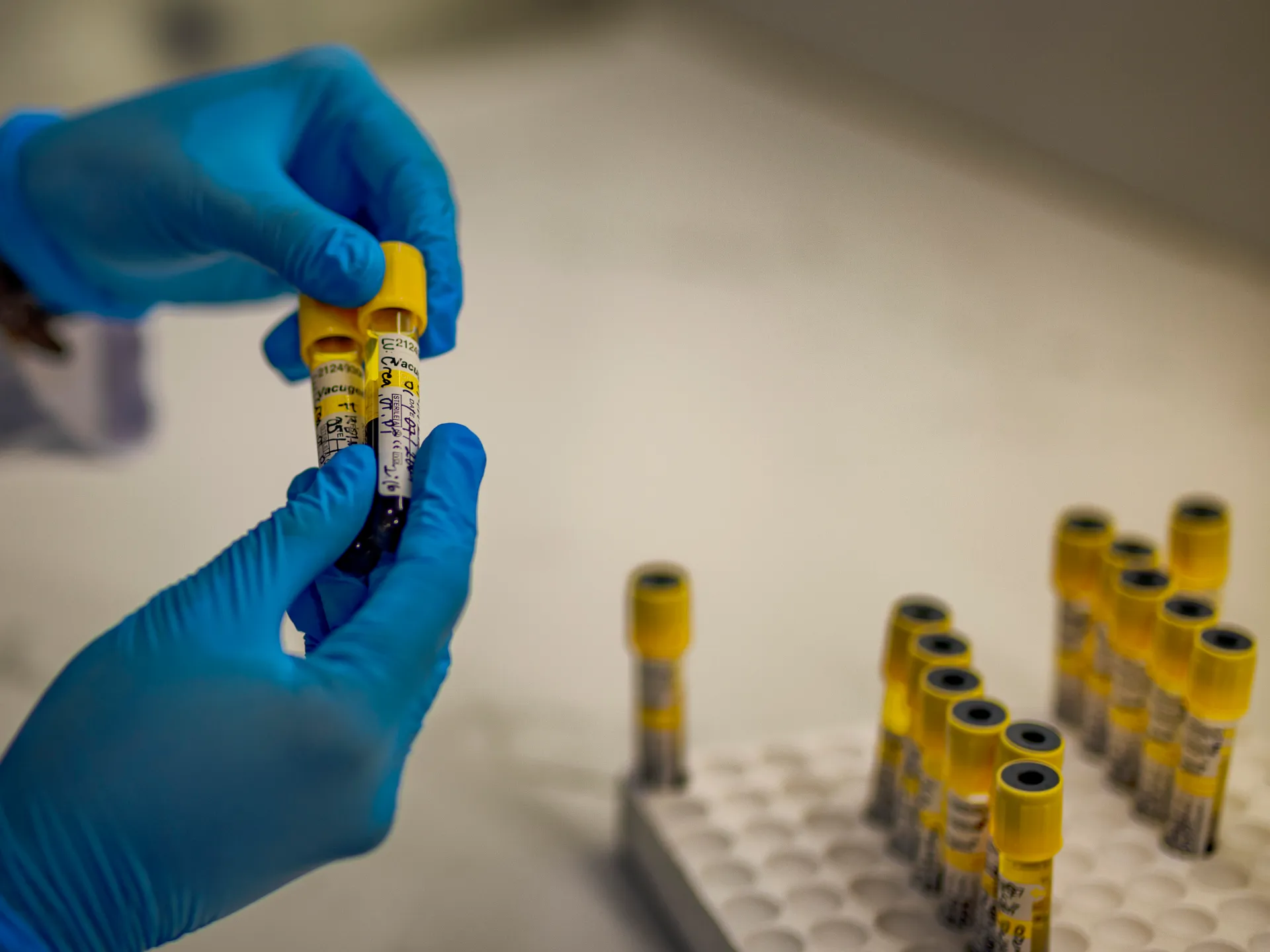
New tools and community-led care can save lives, but only if governments sustain the global HIV response.
UNICEF Associate Director for HIV and Health.
For more than four decades, the global AIDS response has been powered by grief, rage, courage and determination. Families buried loved ones long before their time. Communities confronted discrimination and built networks of care when the silence was deafening. Scientific breakthroughs and community-driven innovation transformed HIV from a near-certain death sentence into a chronic, manageable condition. The result is one of the greatest public health achievements of the past half century. That success is now under threat.
Over the past decade, AIDS-related deaths among children fell by almost 70 percent, and the number of adolescent girls acquiring HIV halved. Twenty-two countries, from Brazil to Bahamas, Cuba to Thailand, have eliminated vertical transmission of HIV (from mothers to newborns) or are on the path to doing so. Last year, the Maldives became the first country in the world to eliminate HIV, syphilis and hepatitis B as public health threats – a milestone that once seemed unimaginable.
In 2025, abrupt funding cuts disrupted the systems that made this progress possible, especially in high-burden countries reliant on sustained investment in HIV programmes across Africa and parts of Asia, Latin America and Eastern Europe.
Prevention efforts stalled. Clinics faced stockouts of essential medicines. Health workers were laid off. Systems built over decades began to unravel in months.
At the United Nations High-Level Meeting on HIV/AIDS, leaders warned the world faces a “perilous moment”, with the global HIV response losing ground.
Behind the headlines and rhetoric are widening inequalities. In West and Central Africa, treatment coverage for pregnant women is too low. In Eastern Europe and Central Asia, one of the few regions where infections are rising, any disruption risks accelerating the epidemic further. In Latin America and the Caribbean, persistent inequalities continue to leave marginalised communities, including young people, without consistent access to prevention and care. Across all regions, children risk becoming even more invisible.
Even before these disruptions, the world was falling short. Today, more than 2.4 million children and adolescents are living with HIV, yet only about 55 percent are receiving life-saving treatment – far behind adults. Every day, around 200 children still die from AIDS-related causes. These are not isolated failures. They are a global failure to reach those most at risk.
A stark Cost of Inaction analysis from UNICEF and UNAIDS shows where this path leads. If HIV prevention and treatment coverage is reduced by half, the world could see up to three million children newly infected with HIV by 2040, and 1.8 million children die from AIDS-related causes. These outcomes are not inevitable. They are the result of choices being made now.
But it was never data alone that moved the world to act on HIV. It was people. Mothers who demanded protection for their children. Young people who challenged stigma and silence. Communities that built systems of care where none existed. Their voices forced governments and the UN to listen, fund and provide services, and they must do so again.
We have the tools, the science and the experience. Expanding proven interventions could prevent more than half a million deaths.
New breakthroughs like lenacapavir, a long-acting prevention option, can protect adolescent girls and young women with just two injections a year, helping overcome barriers of access, stigma and adherence. It can also be used safely by pregnant and breastfeeding women, protecting both mothers and their babies. Expanding access to these innovations globally could transform the trajectory of the epidemic.
Community-led solutions remain central. In South Africa and Zimbabwe, mentor mother programmes are helping women stay on treatment and ensuring children are tested and cared for. In Tanzania, treatment advocates and community health workers have gone door-to-door to identify children living with HIV who had been missed. The lesson is clear: progress happens when services reach people where they are.
Success also depends on how services are delivered and on government leadership. Oman became the first country in the Middle East to eliminate vertical transmission of HIV. They achieved this milestone by using data, providing routine testing and screening for all pregnant women, timely treatment and support, despite challenges such as stigma and COVID‑19 disruptions.
What works is combining policy reform with consistent quality improvements, an approach Kazakhstan is advancing through HIV prevention, treatment and care standards, and a comprehensive HIV action plan. And in Ecuador, the government is integrating HIV services into routine services for all pregnant women, prioritising the path to eliminating vertical transmission of HIV.
Political declarations must be judged by one measure alone: lives saved.
The test is simple. Will children be protected from HIV? Will mothers receive the care they need? Will adolescent girls, whether in Kenya, Jamaica or Fiji, be able to grow up free from the shadow of HIV?
We have come closer than ever before to ending AIDS in children. But progress is not guaranteed. It depends on political will, sustained investment and global solidarity.
If the world allows funding gaps to widen and systems to weaken, the consequences will not be contained to one region; they will be felt globally.
If, instead, we act now on this new political declaration, we can protect a generation, and finally finish what the world began. In the end, our commitments must be judged by one measure alone: lives saved.
The views expressed in this article are the author’s own and do not necessarily reflect Al Jazeera’s editorial policy.
Source: https://www.aljazeera.com/opinions/2026/7/3/an-aids-free-generation-is-within-reach-but-not-guaranteed?traffic_source=rss